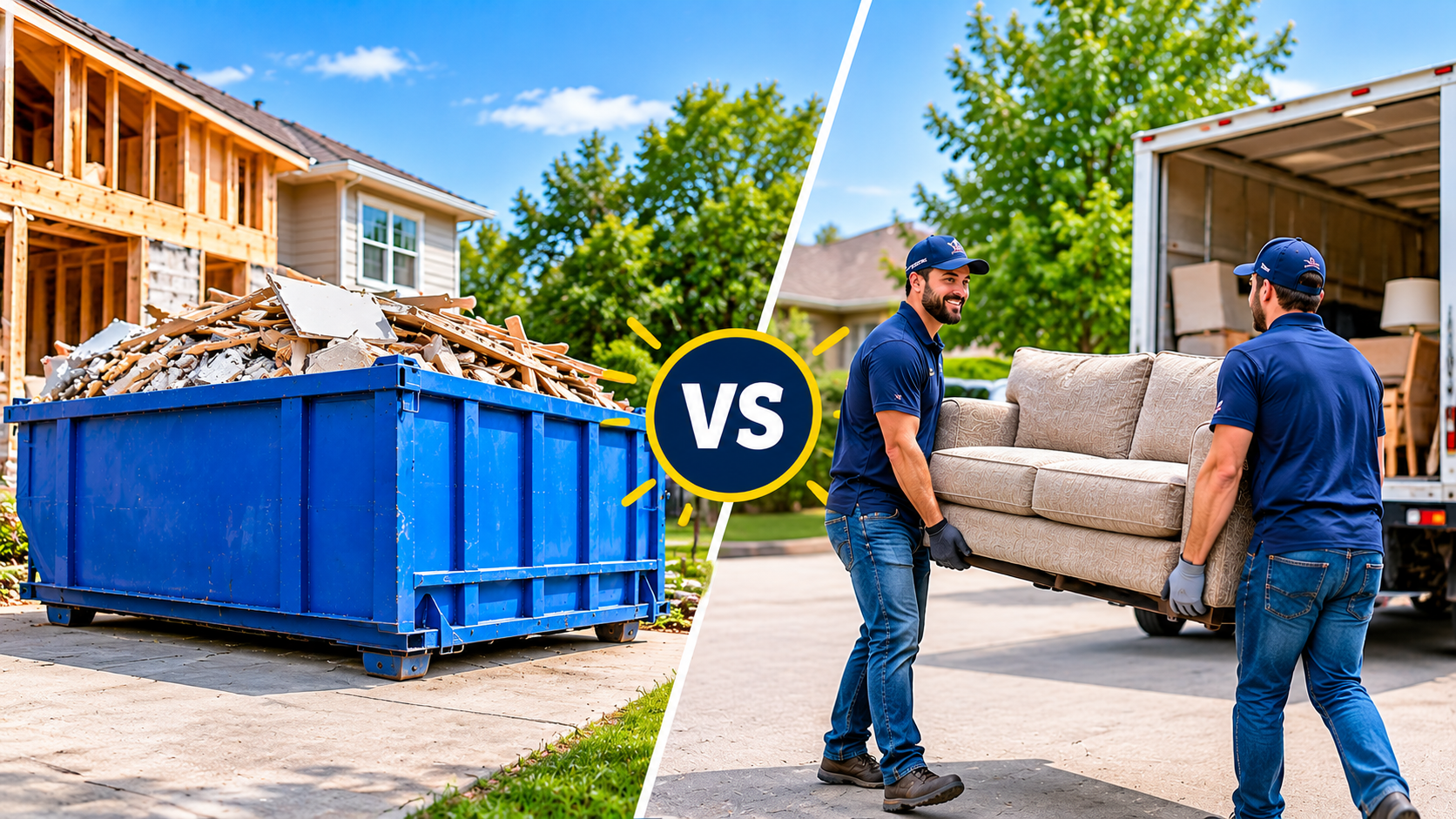
When you have a pile of unwanted items, construction debris, old furniture, or household waste to get rid of, you may wonder whether you should rent a dumpster or hire a junk removal service. Both options can help clear waste from your property, but they work in very different ways.
The right choice depends on the amount and type of material you need to remove, how quickly you want it gone, and whether you want to handle the loading yourself or have someone do it for you.
Understanding the difference between dumpster rental and junk removal can help you avoid paying for a service you do not need and make your cleanup much easier.
A dumpster rental provides you with a container that is delivered to your property. You fill the dumpster yourself during the rental period, and the company returns to pick it up when you are finished.
This option works well for projects that produce waste over several days. Instead of moving everything to the landfill or making repeated trips with a pickup truck, you can place the debris directly into the dumpster.
Dumpster rentals are commonly used for:
For example, if you are remodeling a kitchen, you may have cabinets, flooring, drywall, wood, and other project debris to dispose of. A dumpster placed at your property gives you a convenient place to put that material as the work progresses.
Junk removal is a more hands-on service. Instead of simply delivering a container, a junk removal crew comes to your property, removes the unwanted items, loads them into a truck, and takes them away.
This can be especially helpful when you have large or bulky items that are difficult to move yourself.
Junk removal may be useful for:
For instance, if you have an old sofa, several broken chairs, and a mattress that you no longer want, hiring a junk removal crew can save you from carrying those items outside and loading them yourself.
The biggest difference comes down to who does the physical work.
With a dumpster rental, the container is delivered to you, and you load the materials. Once your project is complete, the dumpster company picks up the container.
With junk removal, the crew handles the loading and hauling. You generally do not need to move the unwanted items yourself.
| Dumpster Rental | Junk Removal |
|---|---|
| Container is delivered to your property | Crew comes to your property |
| You load the dumpster | Crew loads the unwanted items |
| Container remains for a rental period | Items are usually removed during one visit |
| Good for ongoing projects | Good for quick cleanups |
| Works well for renovation debris | Works well for bulky household items |
| You control when the waste is loaded | Crew handles the physical removal |
Neither option is automatically better. The best choice depends on your project.
A dumpster rental is usually a practical choice when you have a significant amount of waste and expect the cleanup to take more than one day.
It is particularly useful when you are working on a project where debris is produced gradually. You can place materials in the container as you work instead of creating several temporary piles around your property.
Home Renovation
Kitchen, bathroom, flooring, and other remodeling projects can generate a steady stream of debris. Having a dumpster nearby allows you to dispose of materials as they are removed.
Construction Projects
Contractors and property owners may use dumpsters for construction and demolition debris such as wood, drywall, and other permitted materials.
Roofing Projects
Roof replacement can generate a large amount of roofing material. A properly sized dumpster can keep the work area organized and provide a central place for permitted roofing debris.
Large Cleanouts
If you are cleaning out a garage, basement, rental property, or entire home, a dumpster gives you more time and space to work through the project.
Yard Cleanup
Landscaping projects can produce branches, leaves, brush, and other yard waste. If your dumpster provider accepts these materials, renting a container can make larger cleanup projects easier.
When Should You Choose Junk Removal?
Junk removal can make more sense when you have a smaller collection of unwanted items and do not want to handle the loading yourself.
It is especially convenient when the main challenge is moving the items, rather than needing a container for an extended project.
For example, if you are replacing your furniture, a junk removal crew may be able to remove the old pieces from your property. This saves you the effort of finding a vehicle, carrying heavy items, and making multiple disposal trips.
Junk removal can also be useful after moving, downsizing, clearing an estate, or cleaning out a property.
There is no single answer because pricing depends on the project.
Dumpster rental pricing can depend on factors such as:
Junk removal pricing may depend on:
A dumpster may be more economical for a large project where you are comfortable doing the loading yourself. Junk removal can be worth the cost when you want the convenience of having someone else handle the heavy lifting and hauling.
The best approach is to compare the total cost of the service with the amount of work you are willing to do yourself.
Choosing the correct dumpster size is important. A container that is too small may require an additional rental or replacement, while one that is much larger than necessary may cost more than needed.
Smaller cleanouts may require a smaller container, while remodeling, roofing, construction, and major property cleanouts generally require more capacity.
For example, a small home cleanup may not need the same dumpster size as a full renovation. Before ordering, consider the amount of debris, the type of material, and whether the waste is bulky or dense.
It is also important not to fill the container above the permitted fill line. Overfilled dumpsters can create transportation and safety problems.
Accepted materials vary by dumpster company and local disposal requirements, so you should always confirm what is allowed before loading the container.
Commonly accepted project materials may include:
Some materials may have special restrictions because of their weight, disposal requirements, or environmental regulations.
Heavy materials such as concrete, dirt, brick, and asphalt may require special handling or specific container rules. Electronics, batteries, chemicals, paint, tires, appliances containing refrigerants, and hazardous materials may also be restricted.
When in doubt, ask the dumpster provider before putting an item into the container.
Can You Put Everything in a Dumpster?
No. A dumpster is not a universal container for every type of waste.
Certain hazardous, prohibited, or specially regulated materials may not be accepted. Local disposal rules can also affect what can be placed in a container.
This is one reason it is important to understand the provider’s accepted-material policy before starting your cleanup.
If you have unusual materials, give the dumpster company a list of what you need to dispose of. They can tell you whether those items can go into the dumpster or whether another disposal option is needed.
What About Heavy Materials?
Heavy debris deserves special attention because materials such as concrete, dirt, brick, and asphalt can become extremely heavy even when the container is not full.
You should not assume that a standard dumpster can be filled with unlimited amounts of heavy material. Weight limits and container requirements may apply.
If your project involves significant amounts of concrete, soil, asphalt, brick, or similar dense materials, discuss the project with your dumpster provider before ordering. This can help you choose the appropriate container and avoid unexpected disposal or weight charges.
Dumpster Rental or Junk Removal for a Home Cleanout?
Both can work for a home cleanout, but the better option depends on how you want to approach the project.
Choose a dumpster when you want to clean the property yourself over several days and have enough material to justify a container.
Choose junk removal when you want a crew to remove the unwanted items for you, particularly if the cleanup involves heavy or bulky furniture and household items.
For a large estate or property cleanout, a dumpster can also be useful when you need time to sort through rooms, closets, garages, and storage areas.
Dumpster Rental or Junk Removal for a Remodeling Project?
For remodeling, dumpster rental is often the more practical option when debris will be generated continuously throughout the project.
For example, a bathroom renovation may produce debris on the first day, additional materials during demolition, and more waste as new materials are installed. Keeping a dumpster at the property means workers can dispose of permitted debris as they go.
Junk removal may be more appropriate when the project is already complete and you simply need someone to remove a limited number of leftover items.
Contractors often prefer dumpster rentals when they need a container available throughout a project.
A dumpster can help keep the job site organized and reduce the need for workers to stop work and transport debris elsewhere.
For contractors handling multiple projects, choosing the right dumpster size and arranging timely delivery and pickup can also make project planning easier.
However, junk removal can still be useful when a project requires the removal of specific bulky items or when a final cleanup needs to be completed quickly.
Before choosing between dumpster rental and junk removal, ask yourself a few simple questions.
How much waste do I have?
A small collection of items may be easier to handle with junk removal, while a large volume of debris may justify a dumpster.
How long will the project take?
If you need several days to work through a cleanup, a dumpster gives you a place to put waste as you go.
Do I want to load the waste myself?
If you are comfortable doing the physical work, dumpster rental can be a good fit. If you want someone else to handle the lifting and loading, junk removal may be more convenient.
What type of material am I disposing of?
Check whether your materials are accepted before booking either service. Heavy, hazardous, electronic, or otherwise restricted materials may require different disposal arrangements.
Where will the container be placed?
If you choose a dumpster, make sure there is enough space for delivery and that the placement location is suitable.

How to Make Your Cleanup Easier
Whichever option you choose, planning ahead can save time and money.
Start by sorting the materials you want to remove. Separate items that may need special disposal from ordinary project debris.
Estimate the volume before ordering. If you are renting a dumpster, think about how much material your project will generate from beginning to end rather than only the debris already sitting outside.
Keep heavy materials within applicable limits and avoid overfilling the container.
Finally, ask about pricing, rental periods, accepted materials, weight limits, delivery, pickup, and additional charges before booking. A clear understanding of the terms can help prevent surprises later.
The decision is fairly simple when you look at how the two services work.
Choose dumpster rental if:
Choose junk removal if:
In some situations, you may even use both services at different stages of a project. For example, junk removal can take care of a few large unwanted items, while a dumpster can handle ongoing renovation debris.
Dumpster rental and junk removal solve similar waste problems, but they are designed for different types of cleanups. Dumpster rental gives you a container and the flexibility to load it as your project progresses. Junk removal provides a crew that handles the loading and hauling for you.
If you are working on a renovation, construction project, roofing job, yard cleanup, or large property cleanout, a dumpster can provide a convenient place to manage your debris. If you have a smaller collection of bulky household items and want the work handled for you, junk removal may be the better fit.
Before making a decision, consider the amount of waste, project timeline, material type, and amount of physical work you want to handle.
If you are unsure which dumpster size or rental option is right for your project, contact Pirate Dumpsters to discuss your cleanup needs. We can help you determine a practical dumpster option for your project and arrange delivery and pickup based on your requirements.
1. What is the main difference between dumpster rental and junk removal?
With dumpster rental, a container is delivered to your property and you load the waste yourself. With junk removal, a crew comes to your property, removes the items, loads them into a truck, and hauls them away.
2. Is dumpster rental better for large cleanouts?
A dumpster can be a good choice for large cleanouts when you want to work through the property yourself and need a container for several days. It gives you a central place to put permitted debris as you clean.
3. Is junk removal better for furniture and bulky items?
Junk removal can be convenient for furniture, mattresses, appliances, and other bulky items because the removal crew handles the loading and hauling. This can save you from moving heavy items yourself.
4. Can I put construction debris in a dumpster?
Many dumpster rentals accept common construction and remodeling debris, but accepted materials and weight limits vary. Materials such as concrete, dirt, asphalt, hazardous waste, and certain electronics may have special restrictions, so confirm the rules before loading.
5. How do I know which dumpster size I need?
Consider the type and total amount of debris your project will produce. A small cleanout generally needs less capacity than a major renovation, roofing project, or construction job. If you are unsure, discuss your project with the dumpster provider before ordering.